/workflow/automation/<id>/log, so you can also bookmark it, open it in a new tab or share its link with a colleague who has access.
Required permission:
- View automation
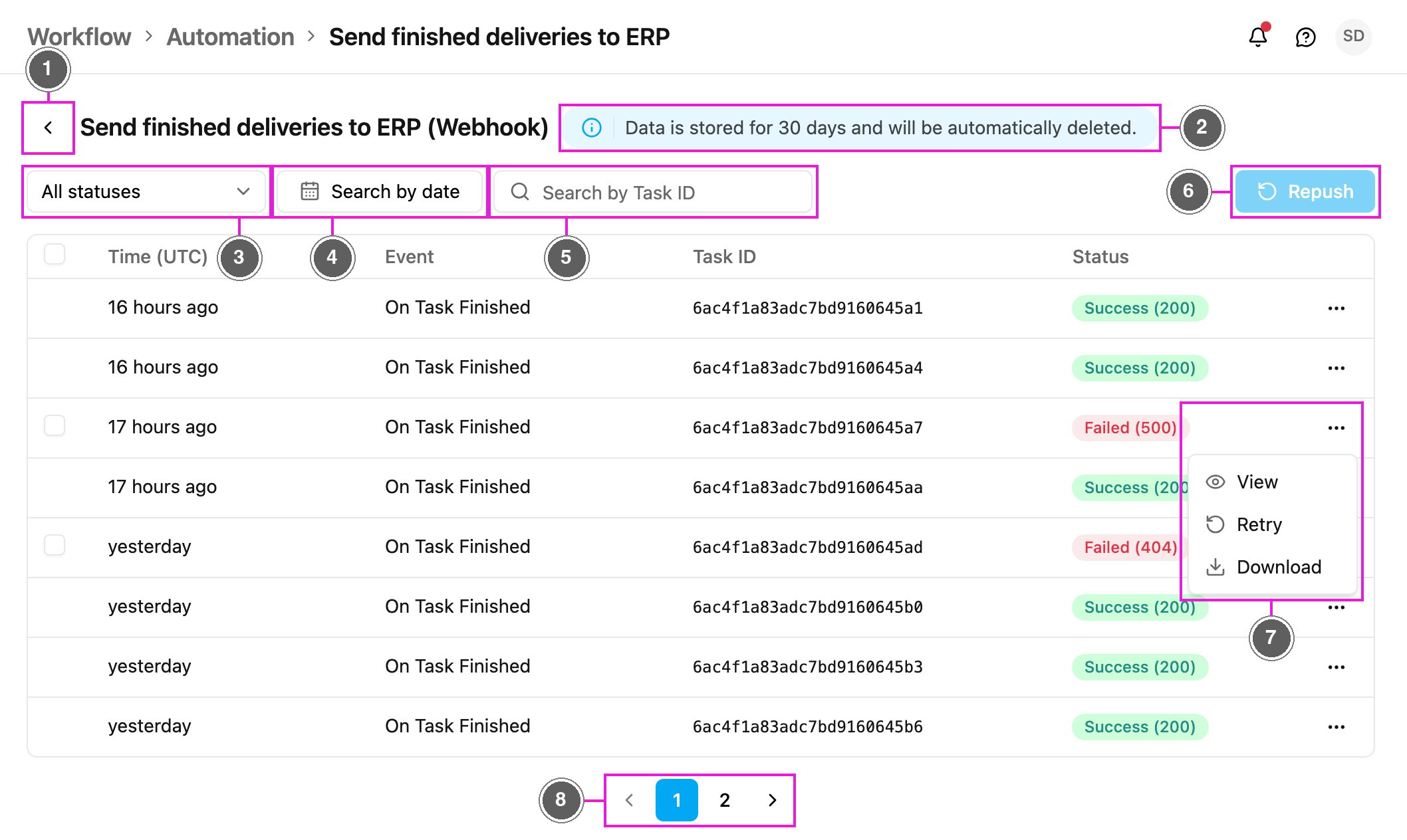
- Back: return to the Automation list, with the filters, search and page you had before.
- Data retention: how long runs are kept. See Data retention.
- All statuses: show only Success or only Failed runs.
- Search by date: pick one day from the calendar to show its runs. Today and Yesterday pick those days in one click, and Clear removes the date. Only one day can be picked at a time.
- Search by Task ID (or Search by Data ID for automations whose event isn’t a task event): find the runs for one record, for example
6ac4f1a83adc7bd9160645a1. Order automations have no search; their Order number column shows the order each run belongs to. - Repush: webhook automations only. See Repushing several webhook runs.
- ⋯: the actions for one run:
- View: see the full request and response of the run.
- Retry: send this run again.
- Download: download the whole run as a
.jsonfile.
- Pages: move between pages of runs. Webhook logs show 100 runs per page; other logs show 20.
- Time (UTC): when the run happened, shown relative to now (for example “16 hours ago”). Point at it to see the exact time. All times in the log are in UTC.
- Event: the event that started the run.
- Task ID (or Data ID, or Order number for order automations): the record that started the run: a task, data source record, routing result, location record or order, depending on the event.
- Status: Success or Failed. For webhooks, the HTTP status code your endpoint answered with is shown too, for example Failed (500) or Success (200).
Reading a run
Click ⋯ on a row and choose View: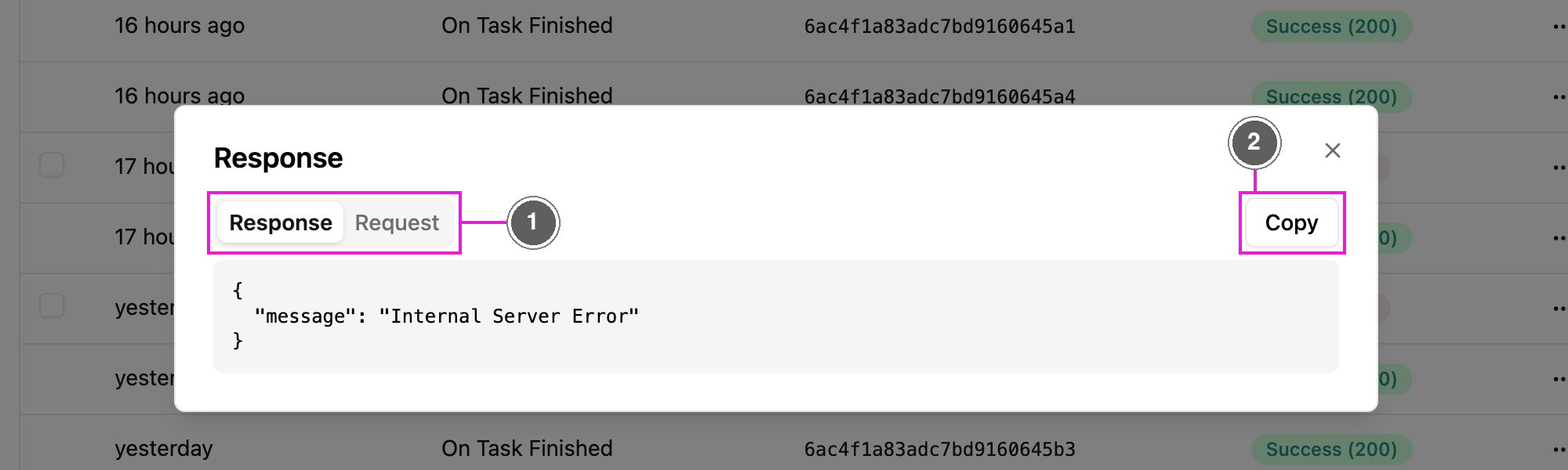
- Response and Request: switch between what your endpoint returned and what was sent (URL, method, headers and body).
- Copy (Response tab only): copy the response JSON, for example to share with whoever runs the receiving system, or to paste as the Sample payload of a webhook’s Custom JSON body.
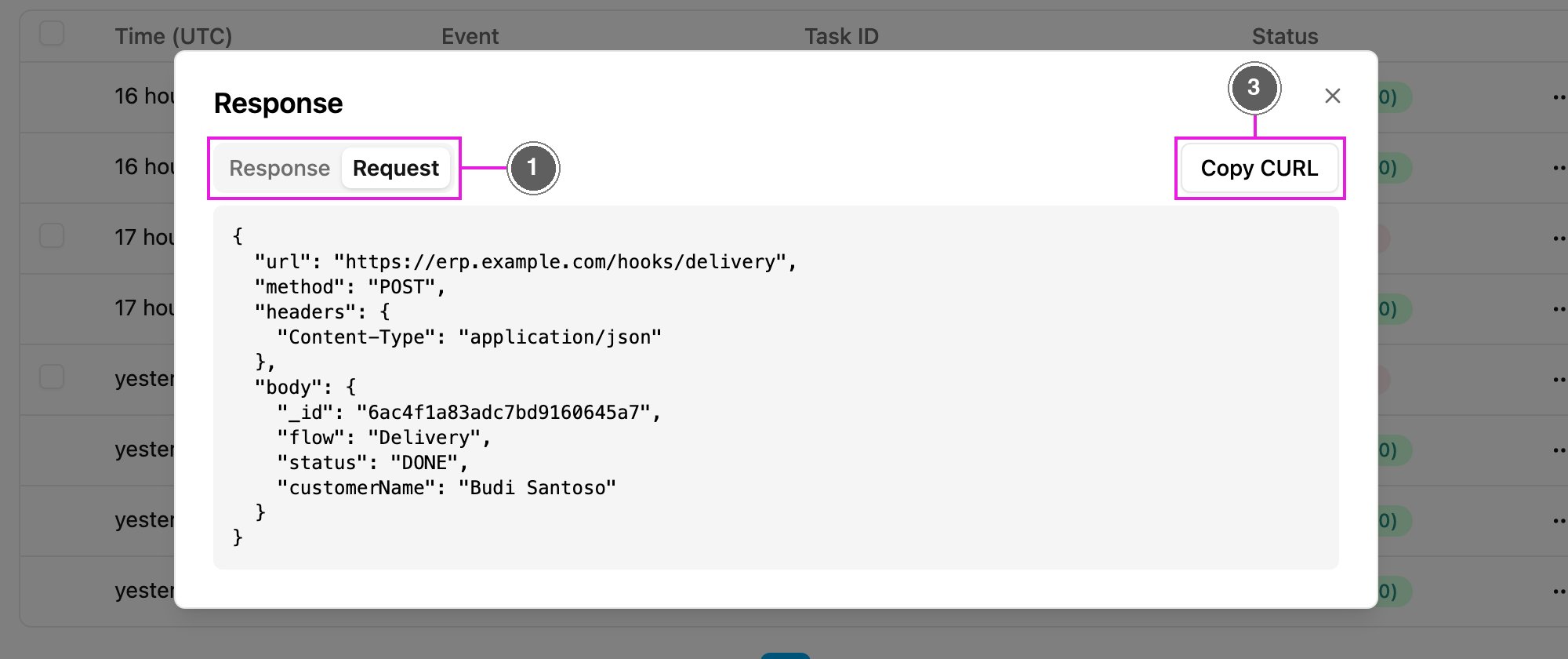
- Copy CURL (Request tab only): copy a ready-to-run cURL command that retries this run, so you can send it again from a terminal or an API tool.
Retrying one run
Click ⋯ on a row and choose Retry: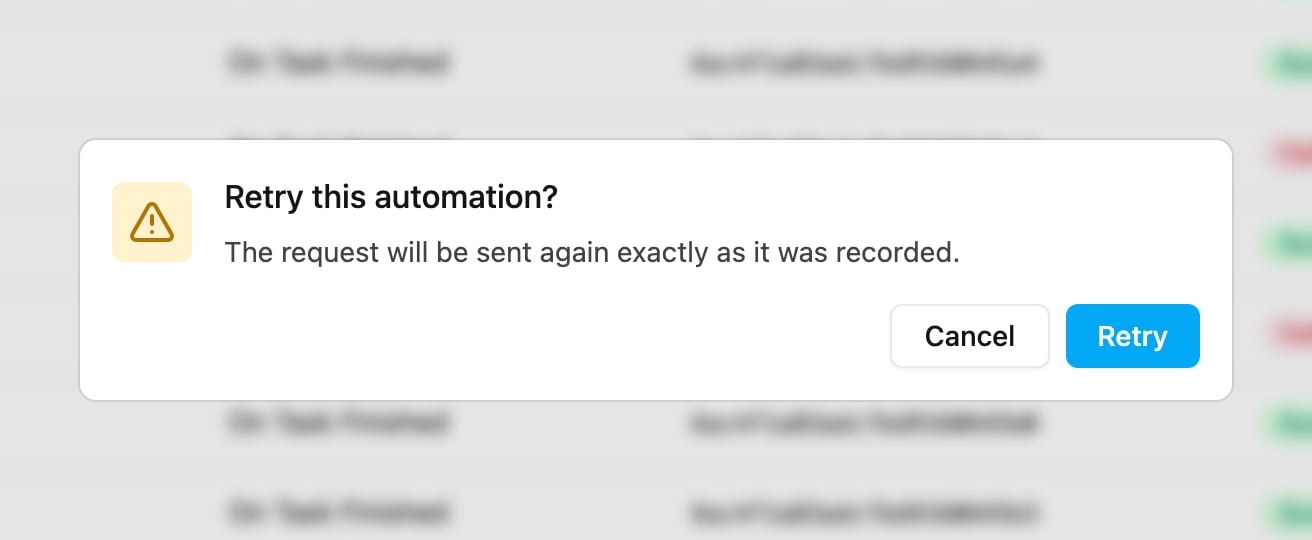
Repushing several webhook runs
Webhook automations have a checkbox on each failed run, so you can send many at once: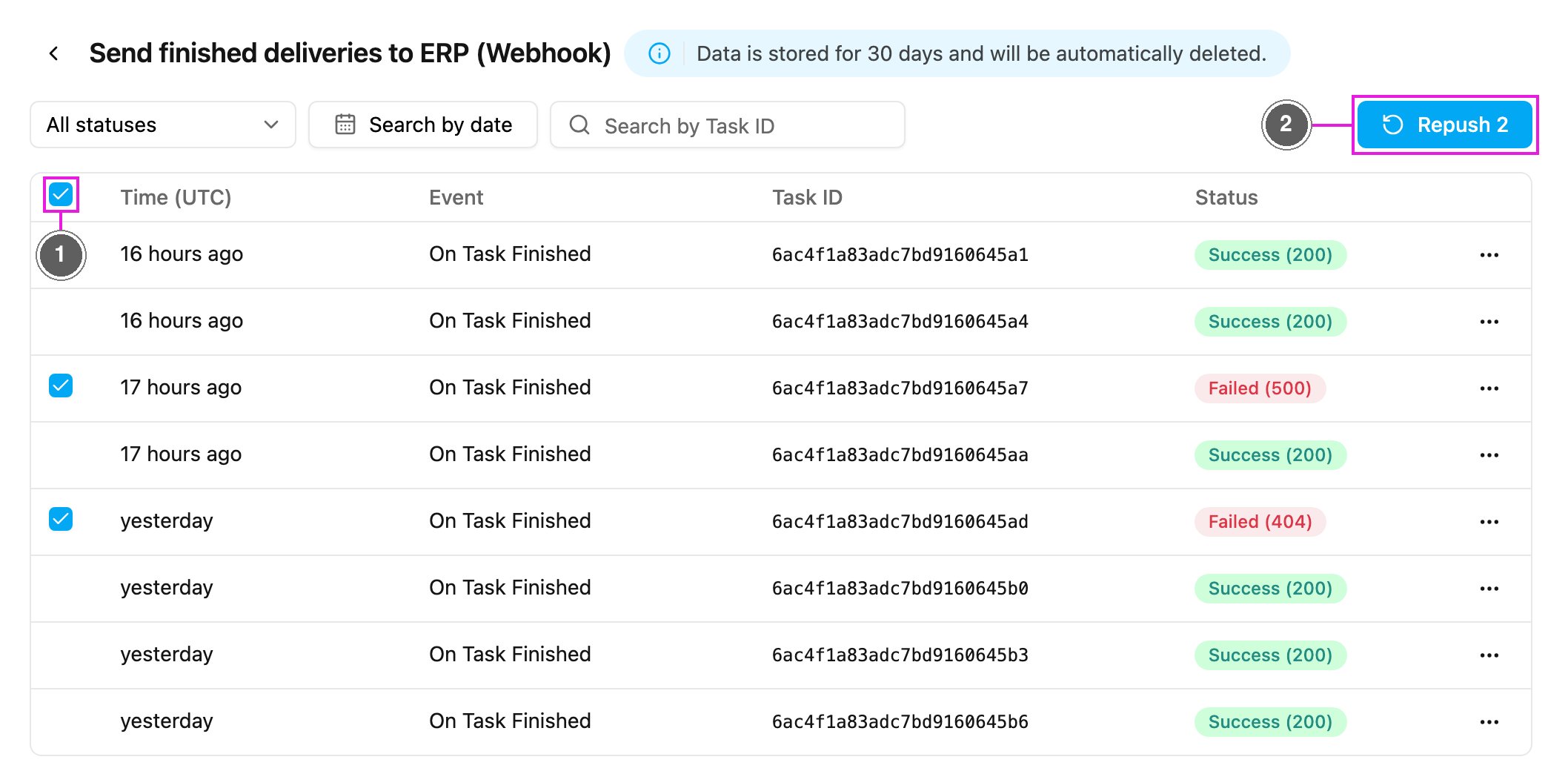
- Tick the failed runs to send again, or tick the header checkbox (Select all failed logs) to select every failed run on the page.
- Repush: send all selected runs again. The button shows how many are selected, for example Repush 2. Repush all selected log? asks you to confirm before anything is sent. A message then tells you how many were repushed, or how many could not be.
On a phone
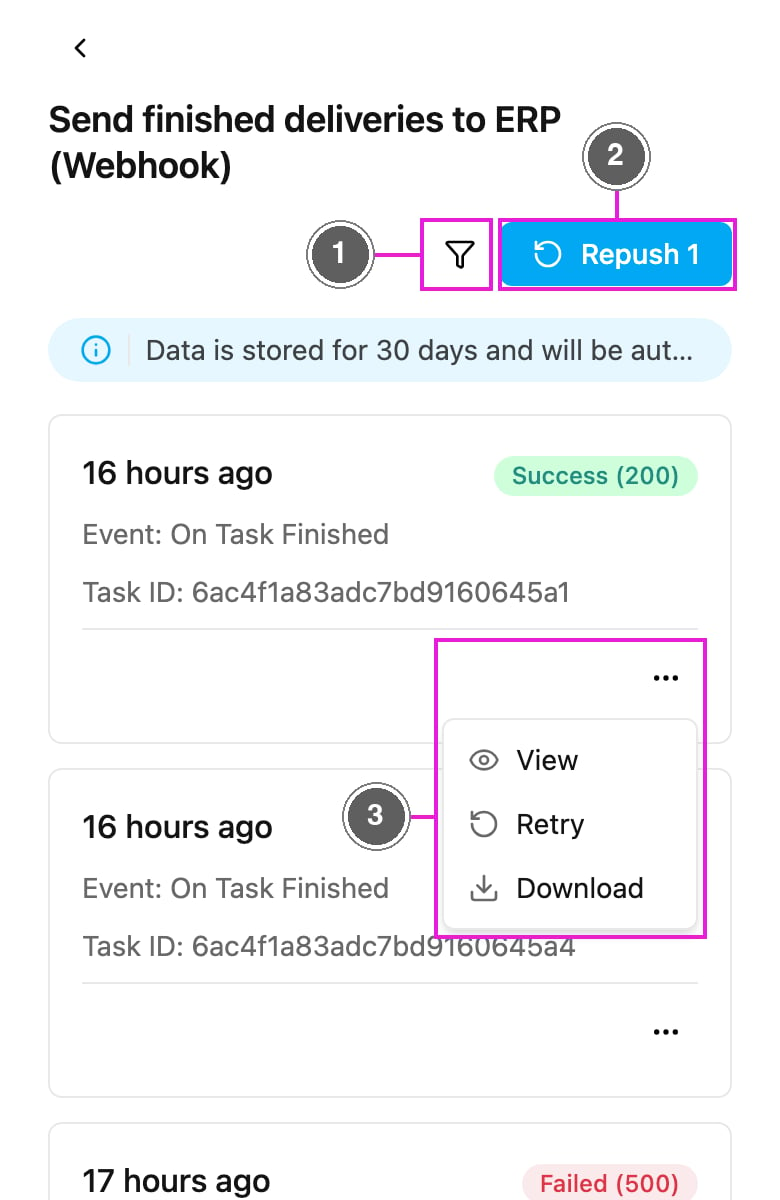
- Filter: opens the filter panel with the status, date and search filters. Today and Yesterday are not shown in the date calendar on a phone.
- Repush: webhook automations only. Tick a failed run’s checkbox on its card, then tap Repush.
- ⋯: the same View, Retry and Download actions as on a computer.